







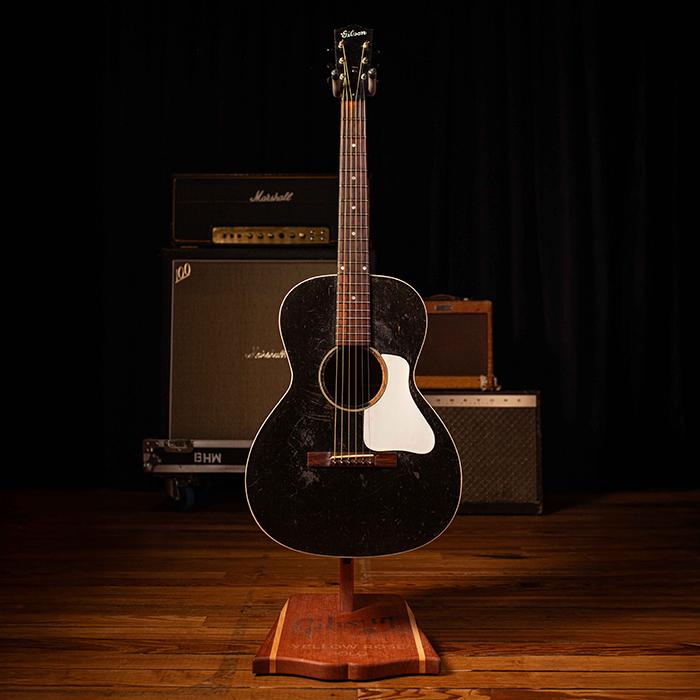
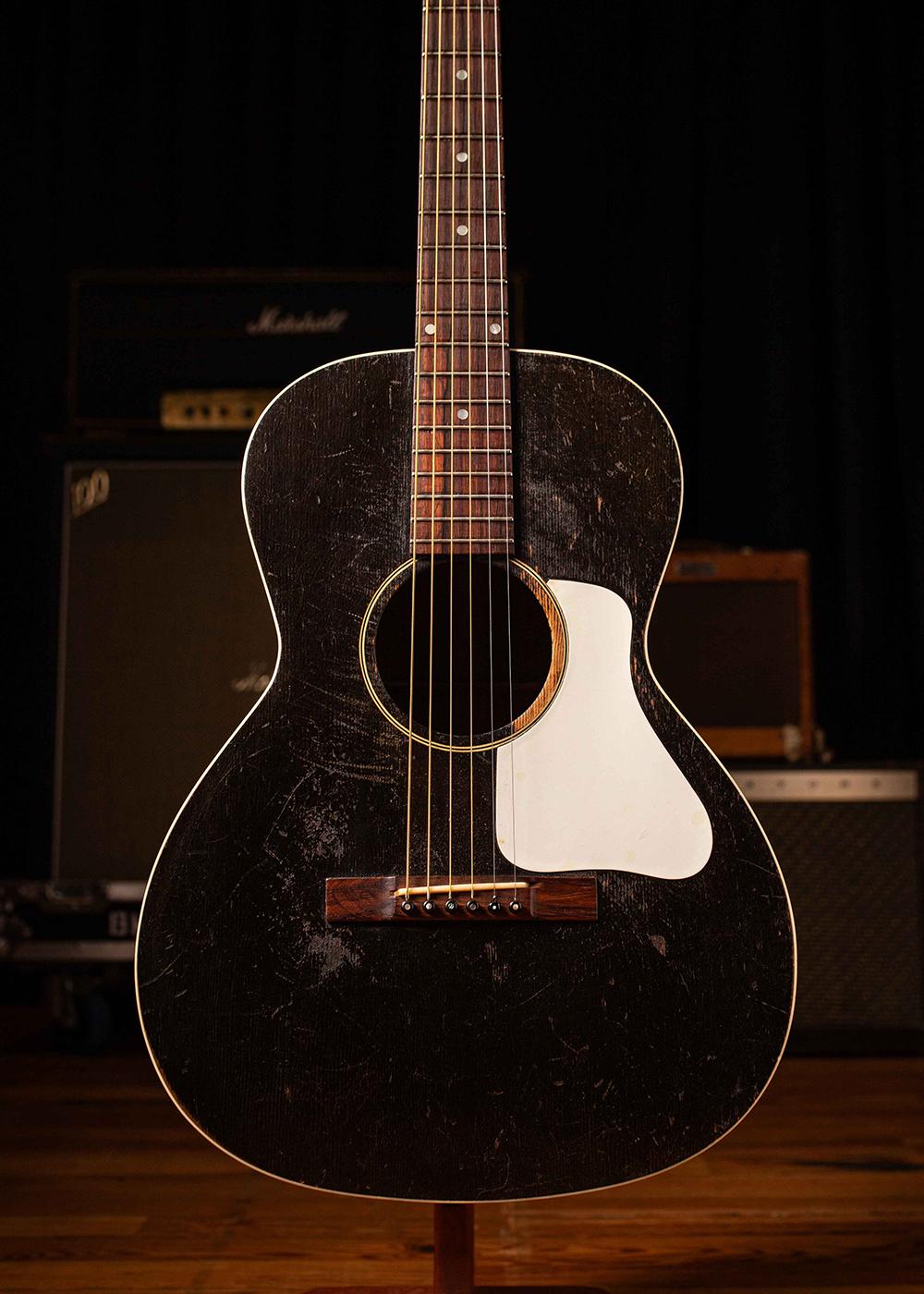
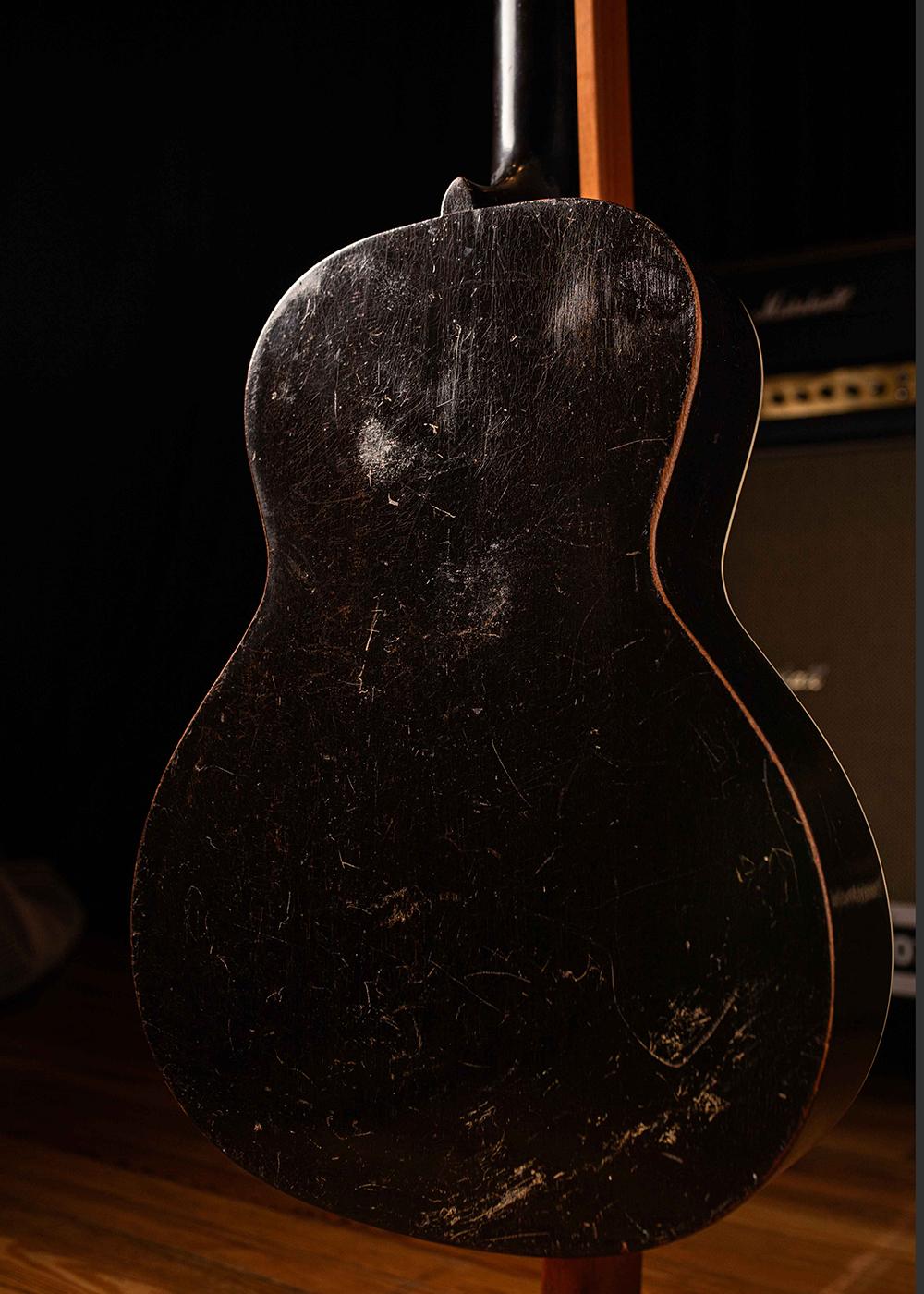
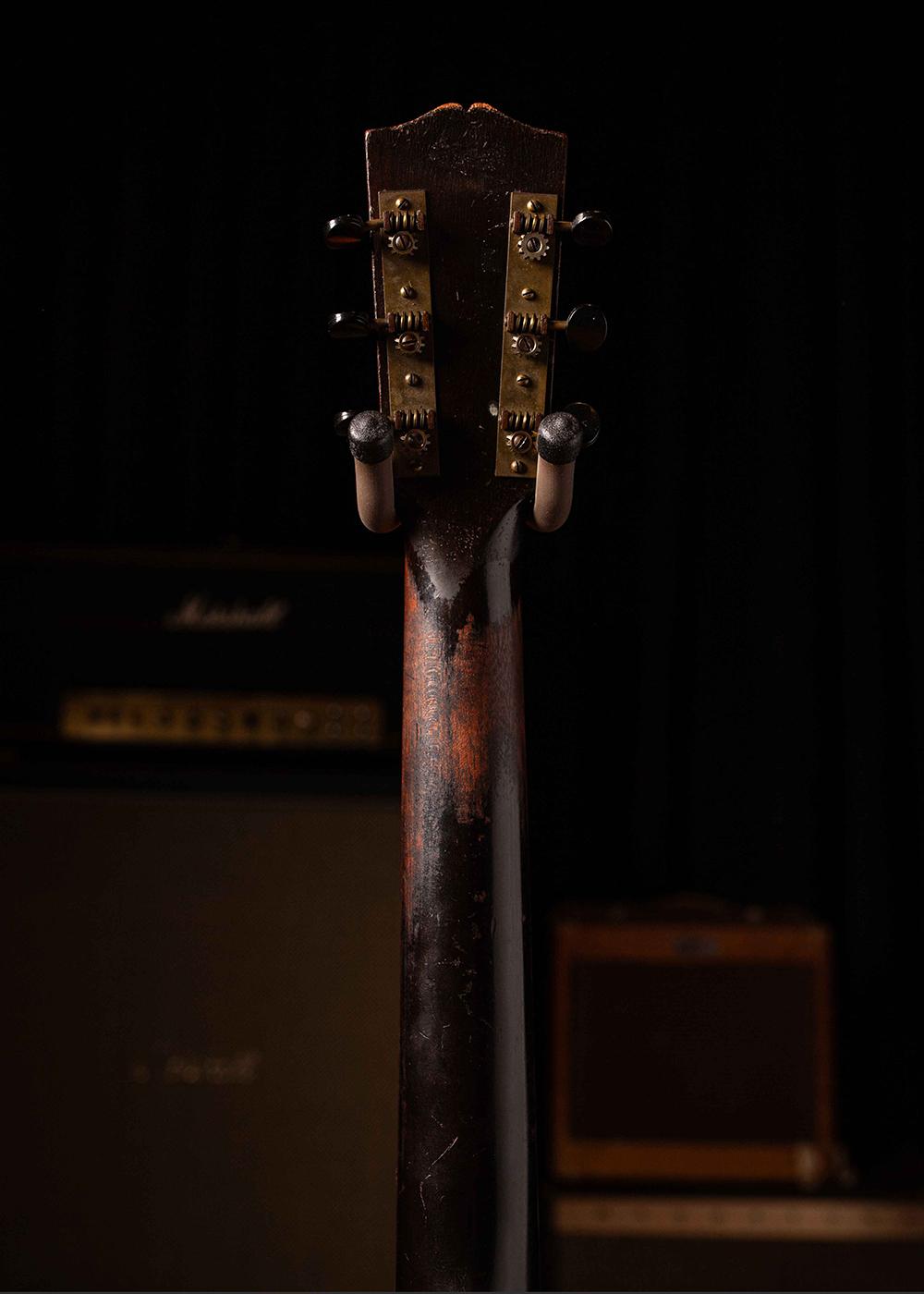
The 1931 Gibson L-00 is one of the most iconic acoustic guitars of the Great Depression era. Conceived as an affordable model within the L-series line, it quickly became a benchmark instrument for its clear, balanced sound and powerful projection despite its compact size. Its simple and elegant design made it a versatile guitar, ideal for everything from rural blues to folk and country.
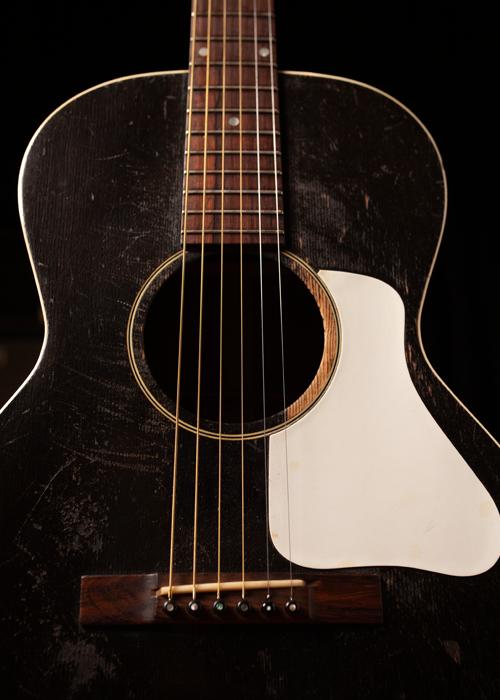
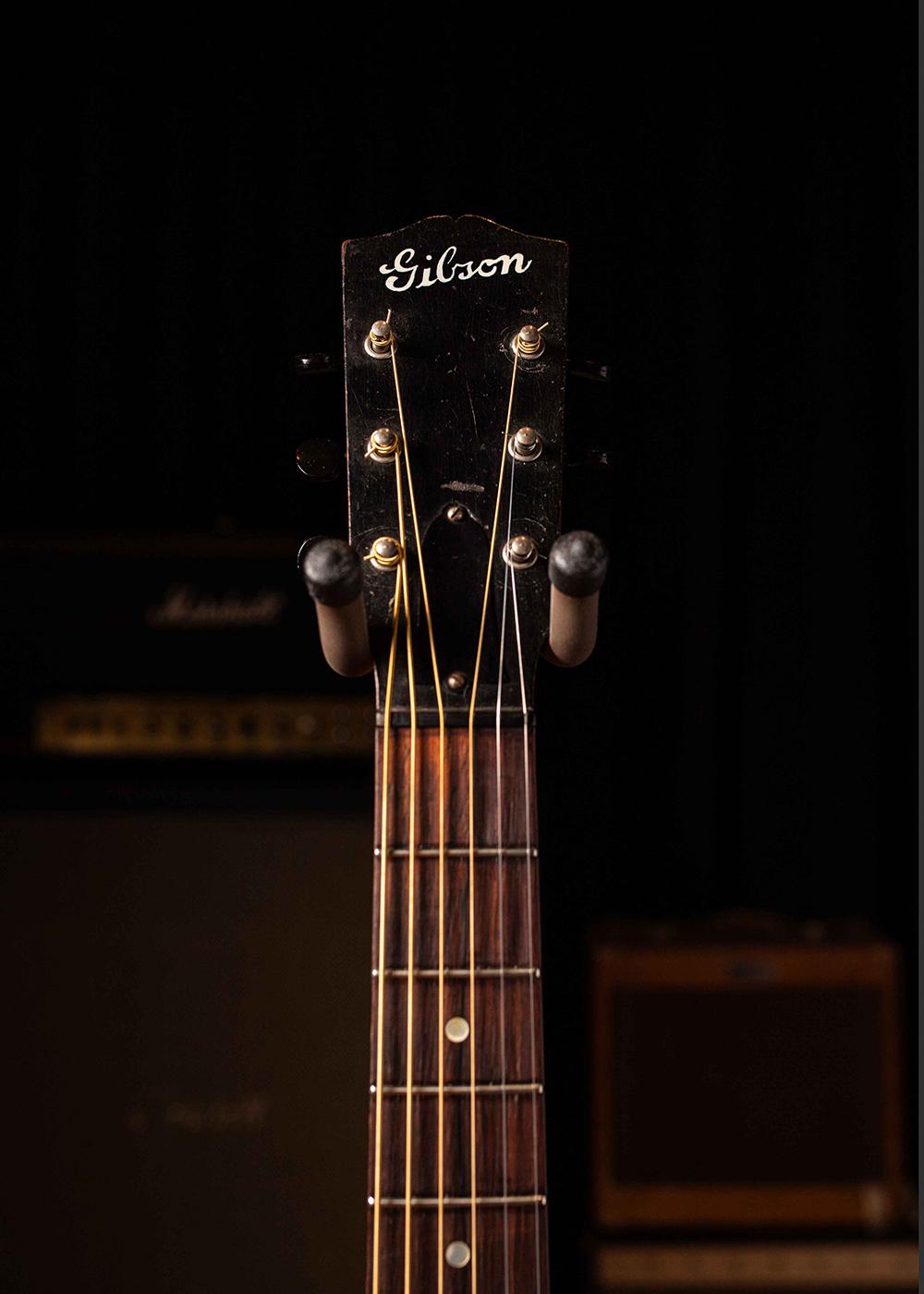
Built with a solid spruce top and mahogany back and sides, it featured a mahogany neck with a gentle «V» profile and a rosewood fingerboard with dot inlays, providing both comfort and character. Its rosewood bridge, open-hole tuners, and classic black finish completed a sober and elegant design, intended to be functional and durable, yet with an aesthetic that remains captivating even today.
The L-00 is a true testament to resilience and creativity in popular music. Its bright tone and understated aesthetic made it the ideal companion for the greats of blues and folk, and today it remains a revered model for its authenticity and its ability to connect with the roots of American music.
Robert Johnson, considered the “father of the blues,” used the L-00 on his legendary recordings of 1936 and 1937. Its sonic character—with pronounced mids and clear highs—perfectly suited his fingerpicking and slide playing style, shaping a sound that became the foundation of blues and, later, rock.
This guitar is treasured in the vault at La Roca.
