







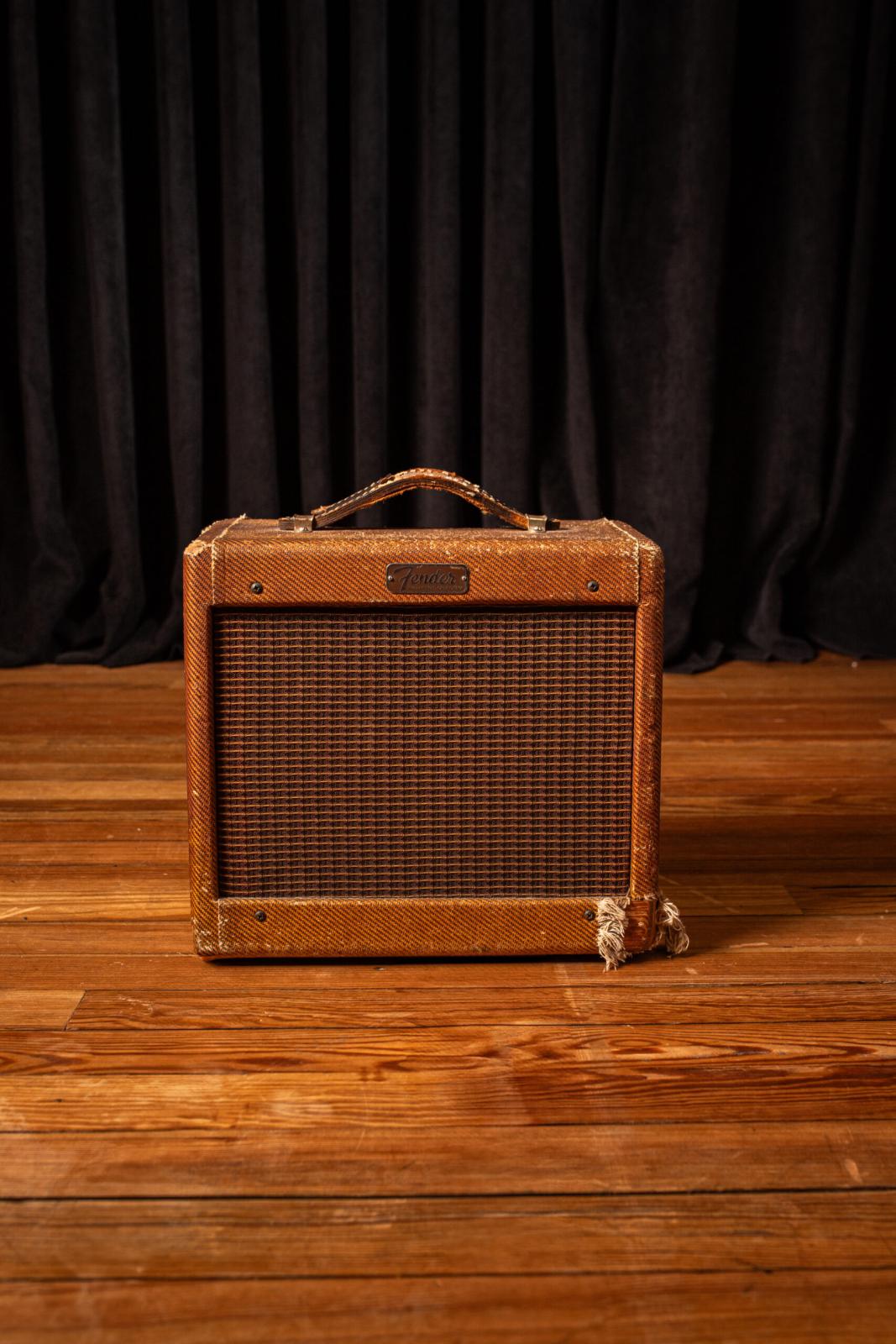
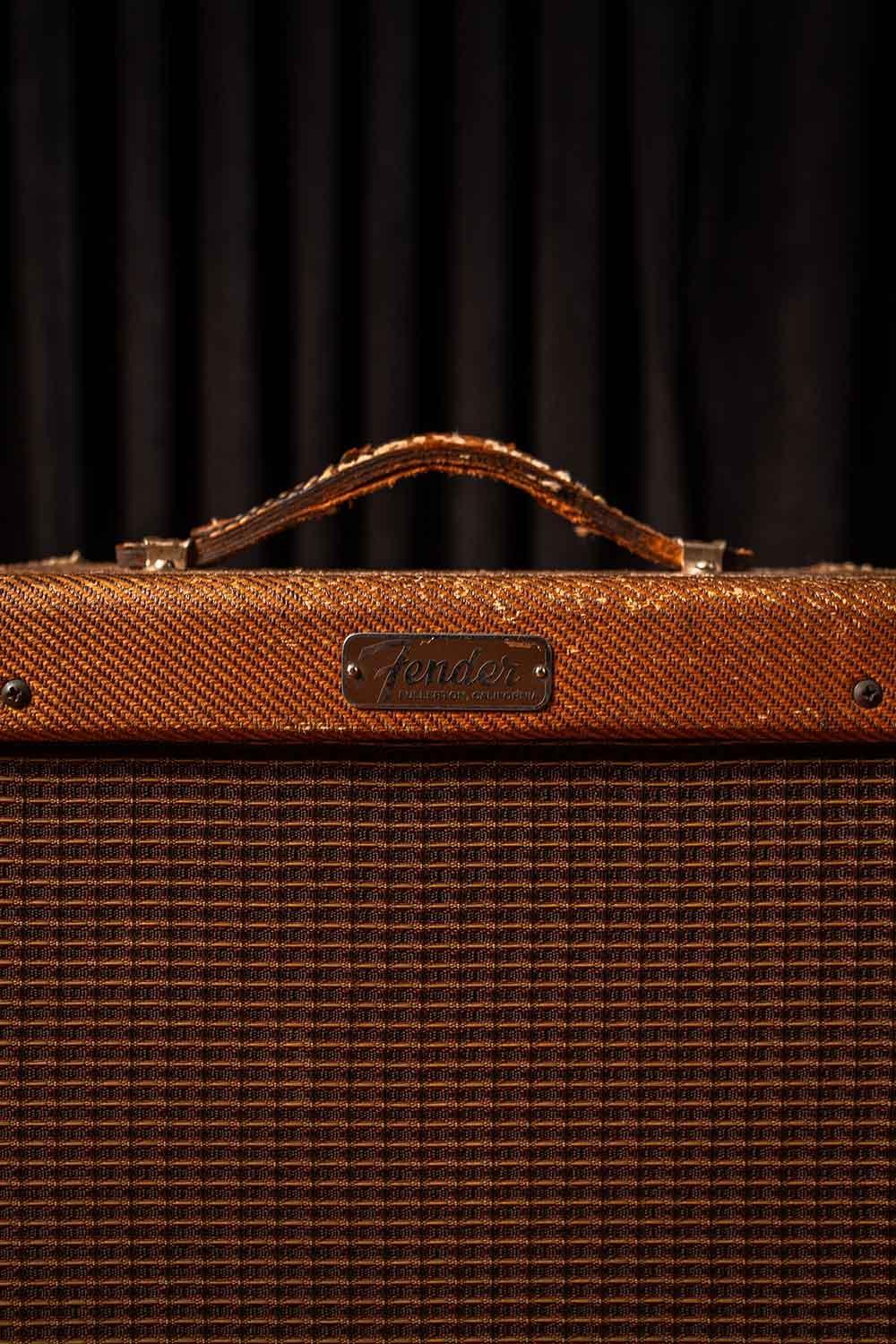
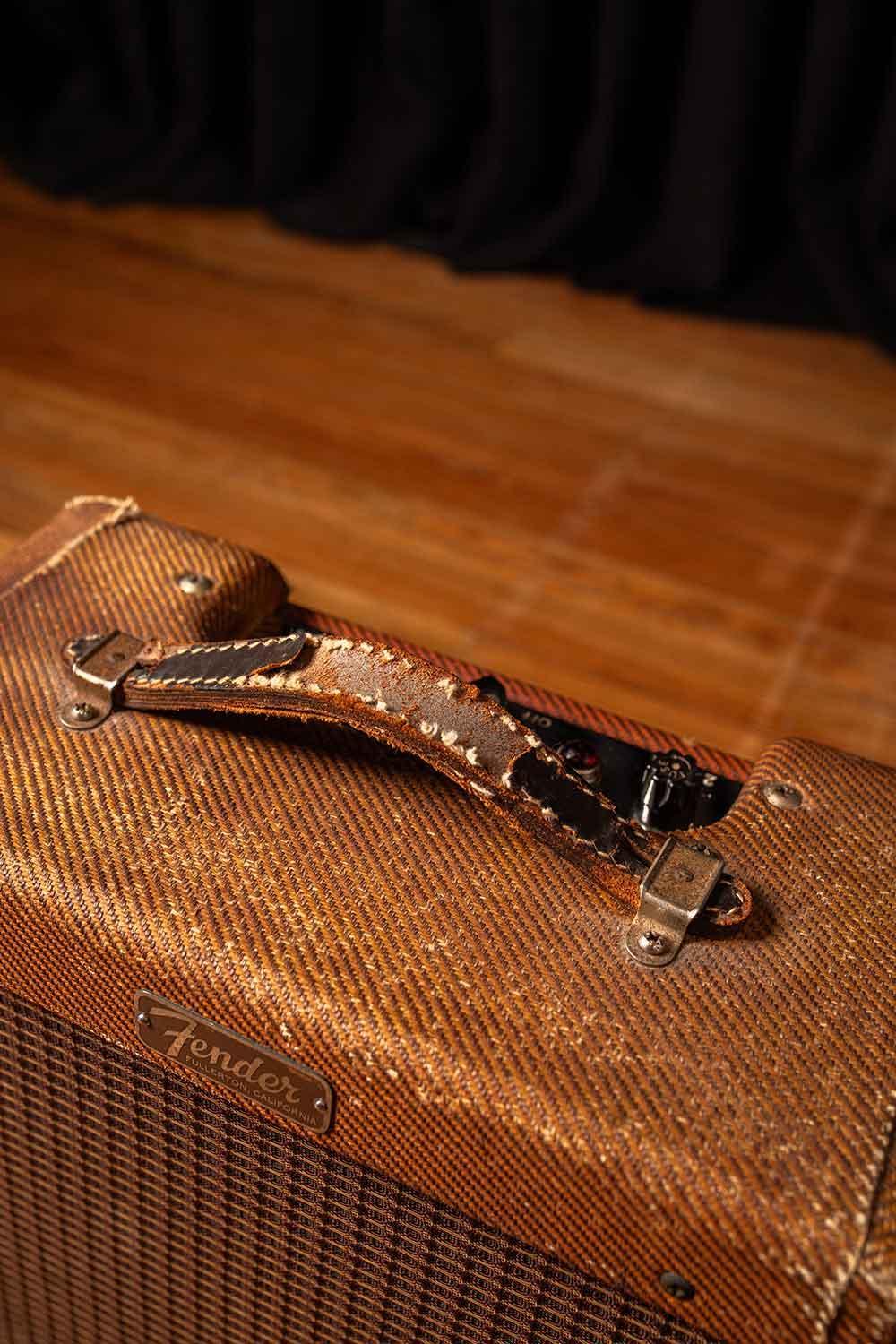
The Fender Champ was born as an affordable amplifier for beginners and ended up becoming the secret weapon of top recording studios.
The origins of this giant date back to 1948, when Leo Fender introduced the Champion 800 (and later the Champion 600) as part of a basic kit for guitar students. In 1955, Fender stylized the exterior with a cotton or tweed fabric finish and officially renamed the line Champ.
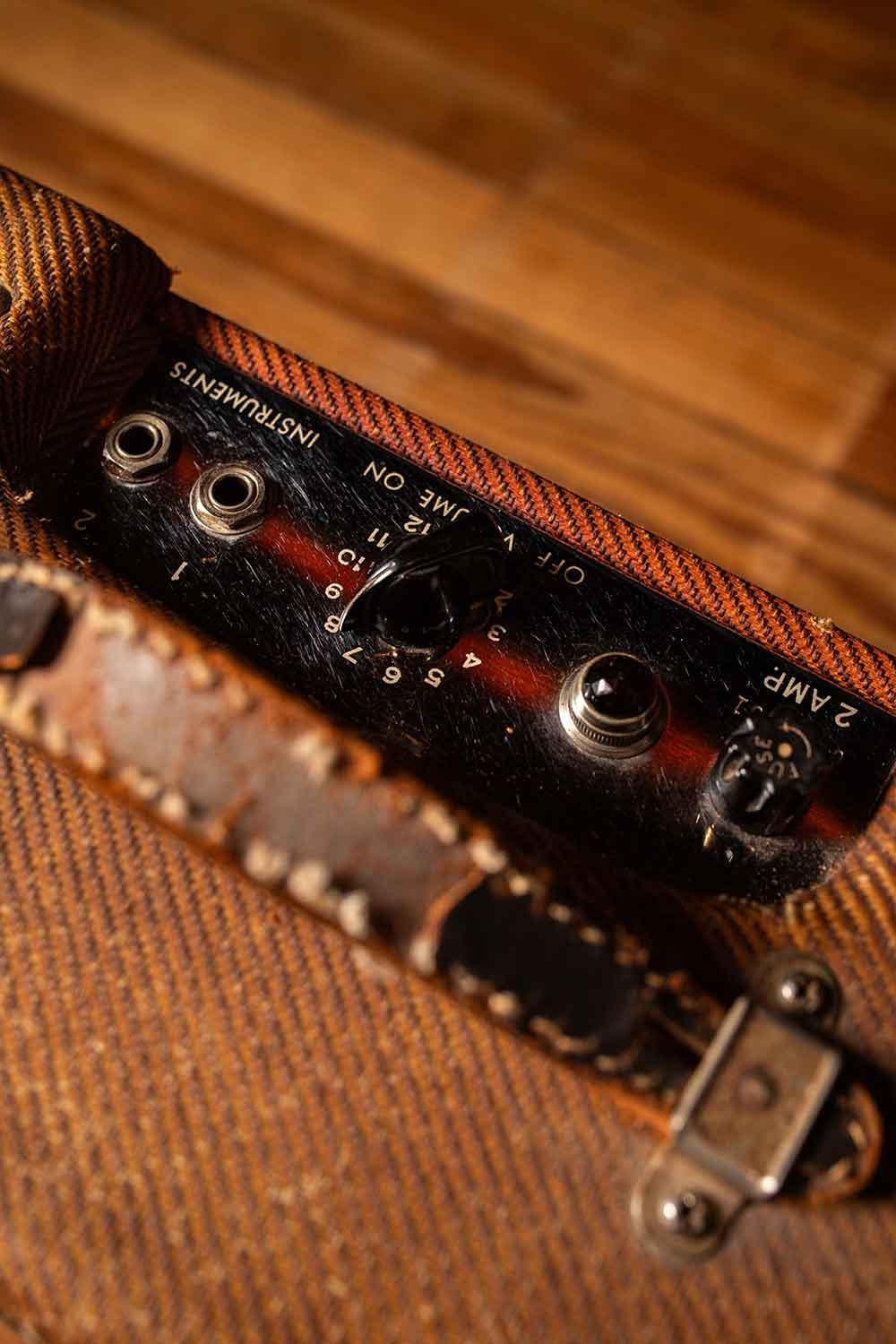
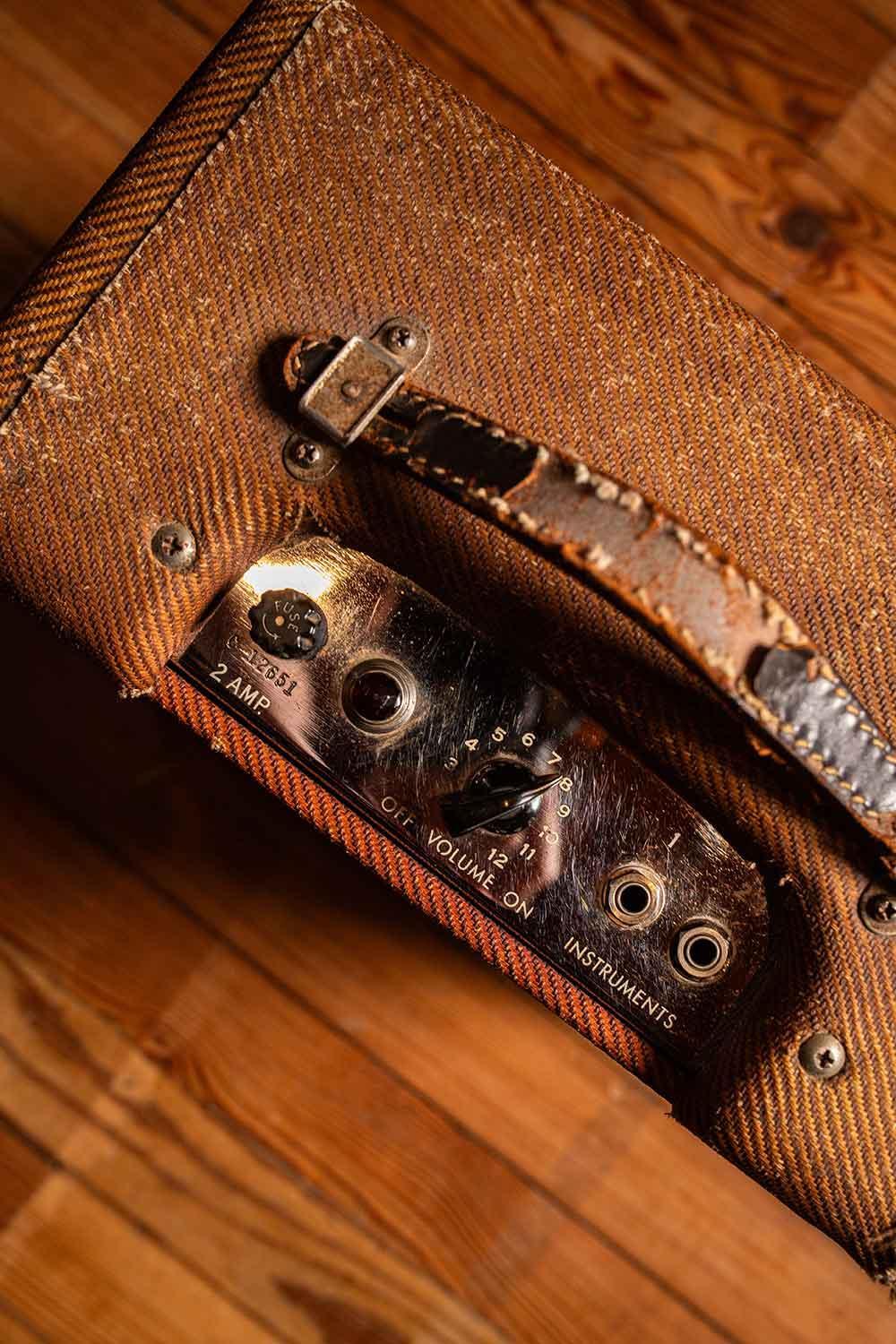
The 5F1 circuit was formally introduced in 1956 and was produced until 1964. The great advantage of the 5F1 lies in its absolute simplicity. Lacking equalization controls (bass/treble) and phase inverters, the guitar signal travels directly and purely, responding instantly to the force with which you pluck the strings and the instrument’s volume potentiometer. When you turn the volume up past 4 or 5, the amplifier doesn’t suddenly saturate; It begins to compress and generate a distortion that is both creamy and raw.
Great music legends recorded historic anthems using a Tweed Champ 5F1 in the studio:
Eric Clapton achieved his legendary distorted tone throughout the album Layla and Other Assorted Love Songs (1970) with a Champ. Keith Richards frequently used it to record the sharp and unmistakable riffs of The Rolling Stones. Joe Walsh played the devastating and classic guitar solo in “Funk #49“ by the James Gang through his small 8-inch combo amp.
